Exploring the impact of digital detox on mental health sets the stage for understanding the crucial relationship between our digital habits and mental well-being. In today's fast-paced world, where screens dominate our daily lives, it's imperative to delve into how unplugging can significantly benefit our mental health.
Introduction to Digital Detox and Mental Health
In today's digital age, where technology is prevalent in almost every aspect of our lives, the concept of digital detox has emerged as a means to disconnect from screens and electronic devices. This intentional break is essential for individuals to maintain a healthy balance and reduce the negative impacts of excessive screen time on their mental well-being.
Mental health, on the other hand, refers to a person's emotional, psychological, and social well-being. It is crucial for overall well-being and affects how we think, feel, and act in everyday life. Poor mental health can lead to various issues such as stress, anxiety, and depression, highlighting the importance of taking care of our mental well-being.
The Relationship Between Excessive Screen Time and Mental Health Issues
Excessive screen time, whether from smartphones, computers, or other devices, has been linked to a range of mental health issues. The constant exposure to screens can contribute to feelings of stress, anxiety, and even sleep disturbances. Moreover, excessive screen time can also lead to a sedentary lifestyle, further impacting mental health negatively.
Potential Benefits of Digital Detox on Mental Health
- Improved Sleep Quality: Disconnecting from screens before bedtime can help regulate sleep patterns and improve the quality of sleep.
- Reduced Stress and Anxiety: Taking a break from technology can reduce feelings of stress and anxiety, allowing individuals to relax and unwind.
- Enhanced Focus and Productivity: By reducing distractions from screens, individuals can improve their focus and productivity in daily tasks.
- Better Interpersonal Relationships: Spending less time on screens can lead to more meaningful interactions with loved ones, strengthening relationships.
Effects of Excessive Screen Time on Mental Health
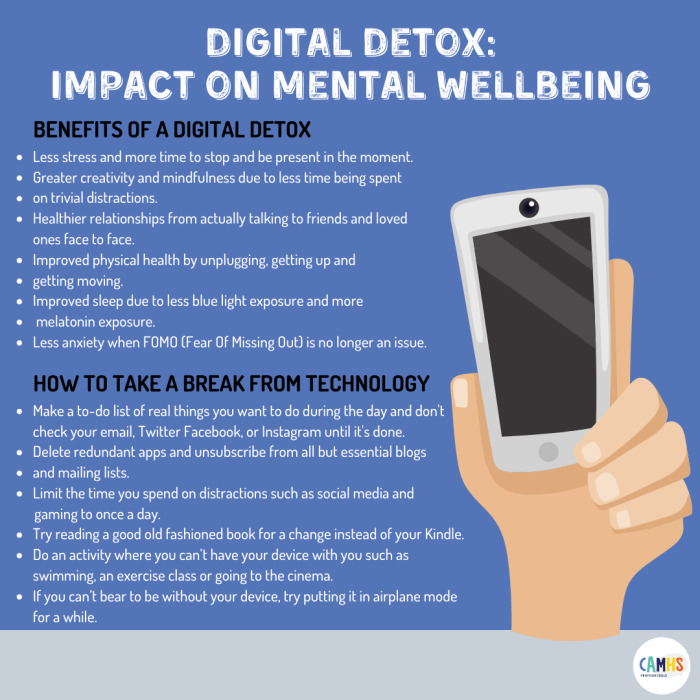
Excessive screen time has become a common concern in today's digital age, with various mental health issues arising as a result of prolonged digital exposure. This constant connection to screens, whether through smartphones, computers, or other devices, can have detrimental effects on our mental well-being.
Common Mental Health Issues Associated with Excessive Screen Time
- Increased levels of anxiety and depression
- Isolation and loneliness
- Attention and concentration difficulties
Constant Digital Exposure Impact on Stress Levels and Cognitive Function
- Excessive screen time can lead to heightened stress levels due to information overload and constant notifications.
- Continuous digital exposure can negatively impact cognitive function, such as memory, attention span, and decision-making abilities.
Correlation Between Social Media Use and Mental Health Challenges
- Excessive use of social media has been linked to feelings of inadequacy, FOMO (fear of missing out), and low self-esteem.
- Comparing oneself to others on social media can trigger feelings of jealousy and negatively impact mental health.
Connection Between Poor Sleep Quality and Excessive Screen Time
- Blue light emitted from screens can disrupt the production of melatonin, a hormone that regulates sleep.
- Engaging with screens before bedtime can lead to poor sleep quality, insomnia, and overall fatigue.
Benefits of Digital Detox on Mental Health
Taking a break from digital devices can have a significant impact on mental well-being. It allows individuals to disconnect from the constant stimulation of screens and focus on other aspects of life, leading to various positive effects on mental health.
Improved Stress Levels and Anxiety
Reducing screen time through digital detox can help alleviate stress levels and anxiety. Constant exposure to screens and notifications can overwhelm the mind, leading to increased feelings of stress and anxiety. By disconnecting from technology, individuals can create a calmer environment for themselves, promoting relaxation and mental clarity.
Enhanced Focus, Productivity, and Mood
Digital detox can also improve focus, productivity, and overall mood. Distractions from digital devices can hinder concentration and productivity, leading to a decrease in overall well-being. By taking a break from screens, individuals can enhance their ability to focus on tasks, increase productivity, and experience a more positive mood.
Improved Sleep Patterns
One of the significant benefits of digital detox on mental health is the improvement in sleep patterns. The blue light emitted by screens can disrupt the body's natural sleep-wake cycle, leading to difficulties falling asleep and poor sleep quality. Disconnecting from technology before bedtime can help individuals relax and promote better sleep, ultimately enhancing mental well-being.
Strategies for Implementing a Digital Detox
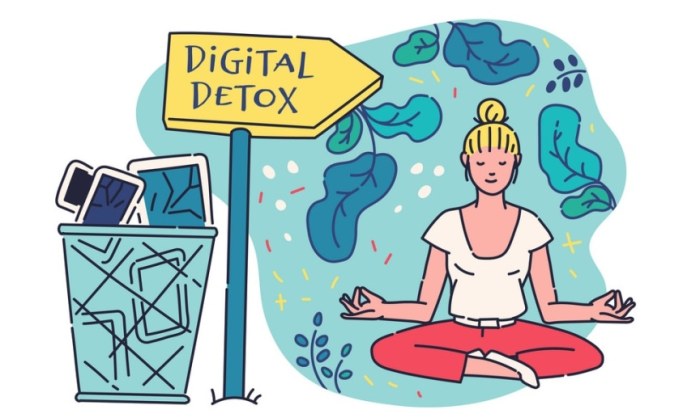
Implementing a digital detox plan can be a great way to improve mental health and overall well-being. By setting boundaries for screen time and creating technology-free zones, individuals can reduce the negative impact of excessive digital use on their mental health.
Setting Boundaries for Screen Time
- Establish specific times during the day when screens are not allowed, such as during meals or before bedtime.
- Use apps or tools that track screen time and set limits to prevent excessive use.
- Communicate with family members or roommates about the importance of limiting screen time in shared spaces.
Implementing Technology-Free Zones
- Designate areas in your home, such as the bedroom or dining room, where screens are not allowed.
- Create a relaxing environment in these zones by adding plants, books, or calming decor to encourage screen-free activities.
- Use these technology-free zones as a place for relaxation, mindfulness, and connection with others.
Alternative Activities during a Digital Detox
- Engage in hobbies such as painting, gardening, or cooking to distract yourself from screen time.
- Exercise regularly by going for walks, practicing yoga, or joining a fitness class to stay active and reduce screen dependency.
- Spend quality time with friends and family by organizing game nights, picnics, or outdoor activities to foster meaningful connections without screens.
Gradually Reducing Screen Time
- Start by identifying the main triggers that lead to excessive screen use and gradually eliminate or reduce them.
- Set achievable goals for reducing screen time each day, such as decreasing by 30 minutes per week until reaching a manageable level.
- Practice mindfulness and self-reflection to understand the impact of screen time on your mental health and make conscious decisions to reduce it over time.
Wrap-Up
In conclusion, the benefits of digital detox on mental health are undeniable. By taking conscious steps to disconnect from the digital realm, individuals can experience improved well-being, reduced stress, and enhanced overall quality of life. Embracing a digital detox may just be the key to unlocking a healthier mind and body in today's digital age.
FAQ Summary
How long should a digital detox ideally last?
A digital detox can vary in duration based on individual preferences and goals. It can range from a day to a week or even longer, depending on the desired level of disconnection.
Can a digital detox improve sleep quality?
Absolutely. Disconnecting from screens before bedtime can help regulate sleep patterns, leading to better quality sleep and overall well-being.
What are some effective alternative activities during a digital detox?
Engaging in activities like reading, meditation, spending time outdoors, or pursuing a hobby can be excellent alternatives to screen time during a digital detox.