Exploring the realm of work-from-home health tips for better posture unveils a crucial aspect of maintaining overall well-being. From the significance of posture to the impact of ergonomic workspace setups, this guide delves into essential practices for professionals navigating remote work environments.
As individuals adapt to new work routines, understanding the nuances of proper posture and its implications on health becomes paramount. This comprehensive guide aims to equip readers with actionable tips and insights to optimize their work-from-home experience.
Importance of Posture
Good posture is essential for maintaining overall health and well-being, especially for individuals working from home. Proper posture not only helps prevent musculoskeletal issues but also contributes to increased energy levels, improved concentration, and enhanced productivity.
Health Issues Caused by Poor Posture
Prolonged sitting with poor posture can lead to various health problems, such as:
- Neck and back pain
- Shoulder tension and stiffness
- Headaches
- Digestive issues
- Reduced lung capacity
- Increased risk of developing chronic conditions like obesity and cardiovascular disease
Benefits of Good Posture for Work-from-Home Professionals
By maintaining good posture while working from home, individuals can experience:
- Improved spinal alignment and reduced risk of back pain
- Enhanced circulation and oxygen flow throughout the body
- Increased energy levels and focus
- Boosted confidence and professional presence during virtual meetings
- Prevention of long-term musculoskeletal issues
Ergonomic Workspace Setup
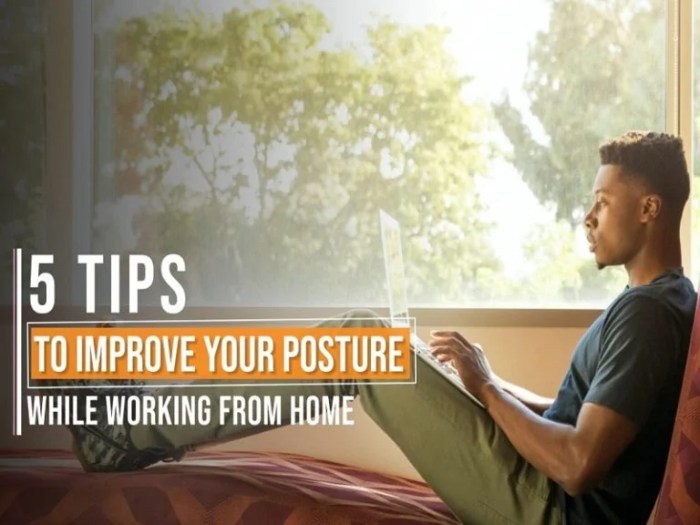
To maintain good posture while working from home, it is essential to set up an ergonomic workspace that promotes proper alignment of the body.
Ideal Desk and Chair Height
- Ensure that your desk is at a height where your elbows are at a 90-degree angle when typing, allowing your wrists to remain straight.
- The chair should be adjusted so that your feet are flat on the floor and your knees are also at a 90-degree angle.
Importance of Supportive Chair
- Invest in a chair with a supportive backrest to maintain the natural curve of your spine and prevent slouching.
- Armrests can help support your arms and reduce strain on your shoulders and neck.
Positioning Computer Screen
- Place your computer screen at eye level to avoid straining your neck from looking down or up.
- Position the screen about an arm's length away from you to reduce eye strain and maintain a comfortable viewing distance.
Regular Stretching Exercises
Regular stretching exercises are essential for maintaining good posture and reducing muscle tension that can result from long hours of sitting at a desk. By incorporating simple stretching routines into your work-from-home schedule, you can improve your overall well-being and productivity.
List of Simple Stretching Exercises
- Neck stretches: Gently tilt your head from side to side, forward and backward to release tension in the neck and shoulders.
- Shoulder rolls: Roll your shoulders forward and backward to relieve tightness in the upper back and shoulders.
- Upper body twists: Sit up straight and twist your upper body to each side, holding the stretch for a few seconds to improve spinal mobility.
- Hamstring stretch: Extend one leg in front of you while sitting and lean forward slightly to stretch the back of your thigh.
- Wrist stretches: Rotate your wrists in circles and gently pull back on your fingers to prevent wrist strain from typing.
Benefits of Stretching Breaks
Regularly incorporating short stretching breaks into your work routine can help improve circulation, reduce muscle stiffness, and prevent discomfort or pain associated with poor posture. These breaks can also boost your energy levels and concentration, leading to increased productivity throughout the day.
Tips for Integrating Stretching Exercises
- Set reminders: Use a timer or scheduling app to prompt you to take stretching breaks every hour to prevent muscle fatigue.
- Combine with other activities: Stretch while waiting for emails to load or during phone calls to make the most of your time.
- Create a routine: Develop a consistent stretching routine that fits seamlessly into your workday to make it a habit.
- Vary your stretches: Include a mix of upper body, lower body, and full-body stretches to target different muscle groups and prevent stiffness.
Posture-Correcting Techniques
Improving your posture is essential for maintaining good spinal health and preventing discomfort or pain. Here are some effective techniques to help you correct your posture:
Shoulder Rolls and Chin Tucks
- Shoulder Rolls: Sit or stand up straight with your shoulders relaxed. Slowly roll your shoulders back in a circular motion, then forward. This helps release tension and improve shoulder alignment.
- Chin Tucks: While sitting or standing tall, gently tuck your chin towards your chest without straining your neck. Hold for a few seconds and release. This helps align your head over your shoulders.
Engaging Core Muscles for Spinal Alignment
Proper engagement of your core muscles is crucial for maintaining correct spinal alignment:
- Focus on engaging your abdominal muscles by pulling your belly button towards your spine.
- Avoid slouching by keeping your core muscles activated while sitting or standing.
Tips to Maintain Proper Posture Throughout the Day
Set reminders on your phone or computer to check your posture regularly.
Use ergonomic chairs and desks to support your spine and encourage good posture.
Take short breaks to stretch and walk around to prevent stiffness and promote circulation.
Importance of Movement
It is crucial to incorporate movement into your work-from-home routine to counteract the negative effects of prolonged sitting on your posture and overall health.
Negative Effects of Prolonged Sitting
Prolonged sitting can lead to muscle stiffness, poor circulation, and increased strain on your back and neck, resulting in poor posture over time.
Suggestions for Movement Breaks
- Set a timer to remind yourself to stand up, stretch, and walk around every hour.
- Incorporate short exercise breaks throughout the day, such as squats, lunges, or simple yoga poses.
- Take phone calls or virtual meetings while standing or walking to avoid prolonged sitting.
Tips for Setting Reminders
Use technology to your advantage by setting alarms or calendar notifications to prompt you to take movement breaks regularly. You can also use apps or wearable devices to track your activity levels and remind you to stay active.
Outcome Summary
Embracing these work-from-home health tips for better posture can not only enhance physical well-being but also boost productivity and focus. By prioritizing posture correction techniques, ergonomic setups, and regular movement breaks, individuals can cultivate a balanced work environment that promotes long-term health benefits.
FAQs
How does poor posture affect overall health?
Poor posture can lead to issues such as back pain, neck strain, and reduced lung capacity, impacting overall well-being and productivity.
What are some simple stretching exercises to improve posture?
Examples include shoulder rolls, chin tucks, and chest stretches to alleviate muscle tension and promote better alignment.
How often should movement breaks be incorporated into the work routine?
It is recommended to take short movement breaks every 30-60 minutes to combat the negative effects of prolonged sitting.